The link above is to a site page for ease of reference to the bird summaries. There are approximately 30 summaries so far. The plan is to add further birds to this list, as well as adding revisions to those already prepared, e.g. by adding a link to the directory to the posts.
When is a sparrow not a sparrow? When its a Dunnock. Sometimes referred to as a hedge sparrow, there are over 2.5 million territories in the UK. Its a common visitor to gardens.
“On your marks, get set,…”
Male Dunnocks sing in the winter rivalling the Robin. Gardeners are encouraged to plant dense shrubs for nesting and set up feeding stations to help its long-term survival.
Peregrine Falcon photographed at a bird of prey centre in Cornwall
The fastest animal on the planet; clocked at 243 mph in a stoop! A targeted pigeon would not know what hit it. There are 1,500 breeding pairs in the UK. Peregrines breed on buildings in some towns and cities, e.g. Salisbury Cathedral has a web cam focused on a peregrine nest on its spire.
Peregrine in flight
Earlier in the summer I attended a morning performance at the Minack open air Theatre in Cornwall. The performance was brilliant, but towards the end my attention was drawn to a peregrine falcon flying overhead. I cannot remember much of the performance from that point on. Beautiful, graceful and powerful bird.
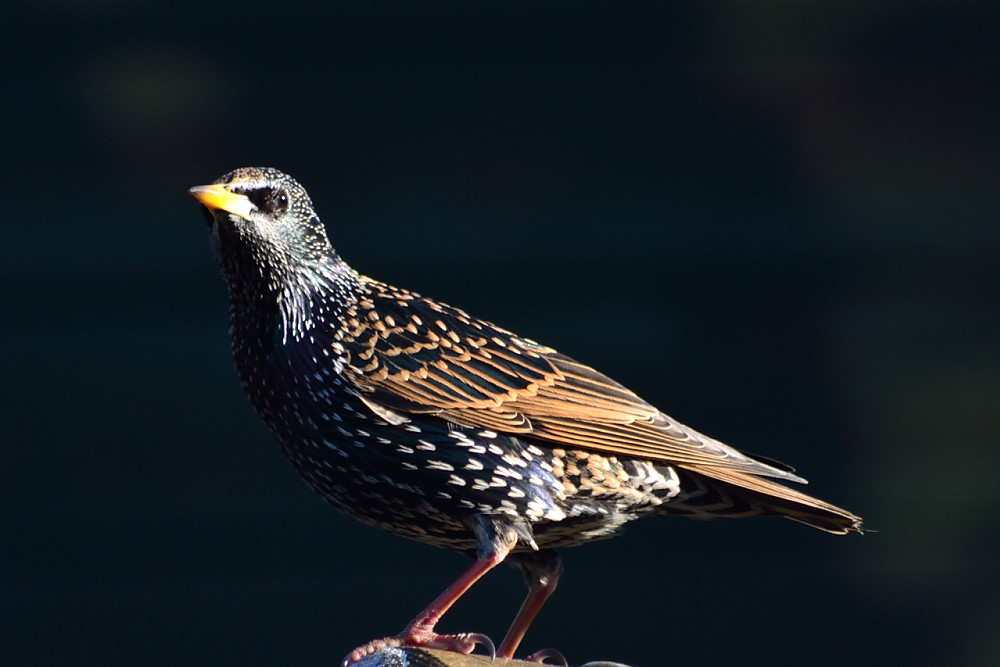
The most startling fact about the starling is that although there are 1.9 million in the UK, this is after a decline of 80% since 1969. I was 11 in 1969. What happened? The State of Nature report offers some insights. I remember the drastic removal of hedges and habitat by the farming community. Is it too simplistic to attribute the decline solely to this factor?
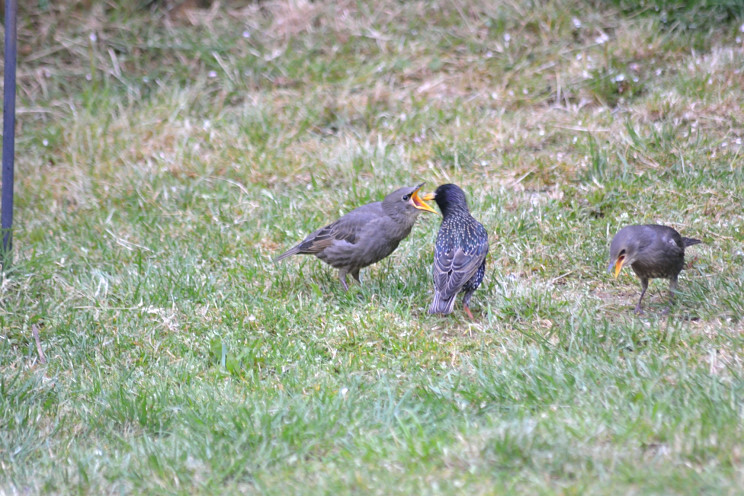
Feeding time
How do they know? Garden bird feeding stations can quickly be overtaken by these loud, raucous birds. As soon as the mealworm is put out they are there, not just ones and twos, but quite large groups. Their antennae for food works well.
Excitedly my son exclaimed. “I’ve got a wren”. Then on the way back to the car he was dawdling, reviewing his photos on the LCD screen. “Do wrens have white throats?” he asked. Back at the car he got out our RSPB handbook and finally figured out what he had photographed.
Whitethroat
There are about 1.1 million territories in the UK of this summer migrant. For such a small bird it travels incredible distances: from the UK to central Africa for winter, only to make the return trip in the mid April.
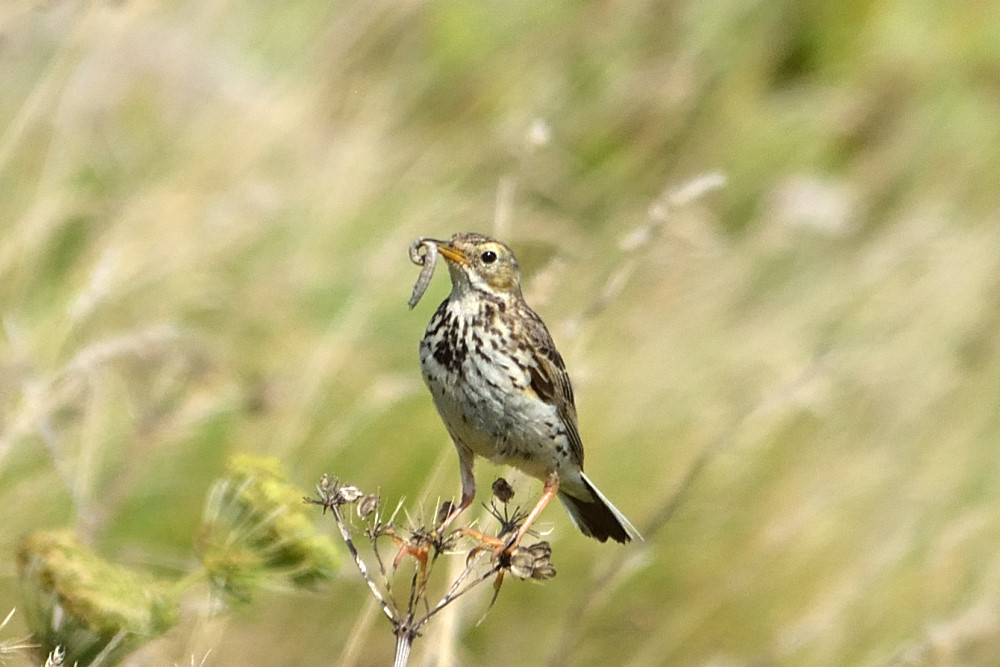
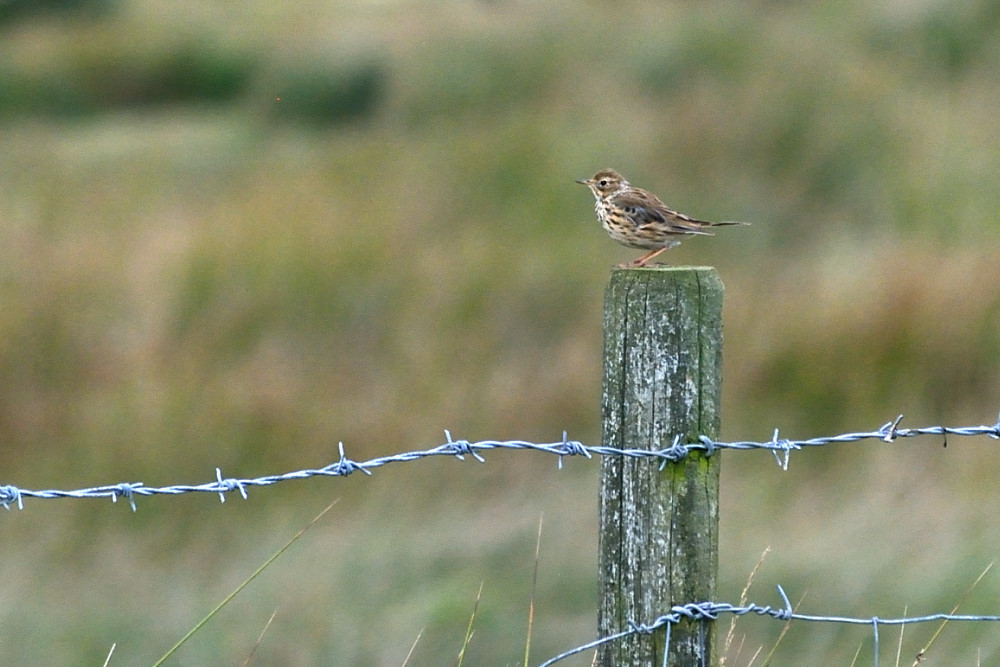
There are 2 million pairs of Meadow Pipit in the UK, but this is after a 40% recent decline. It breeds in upland moors and other open country. It can be seen perching on prominent plants.
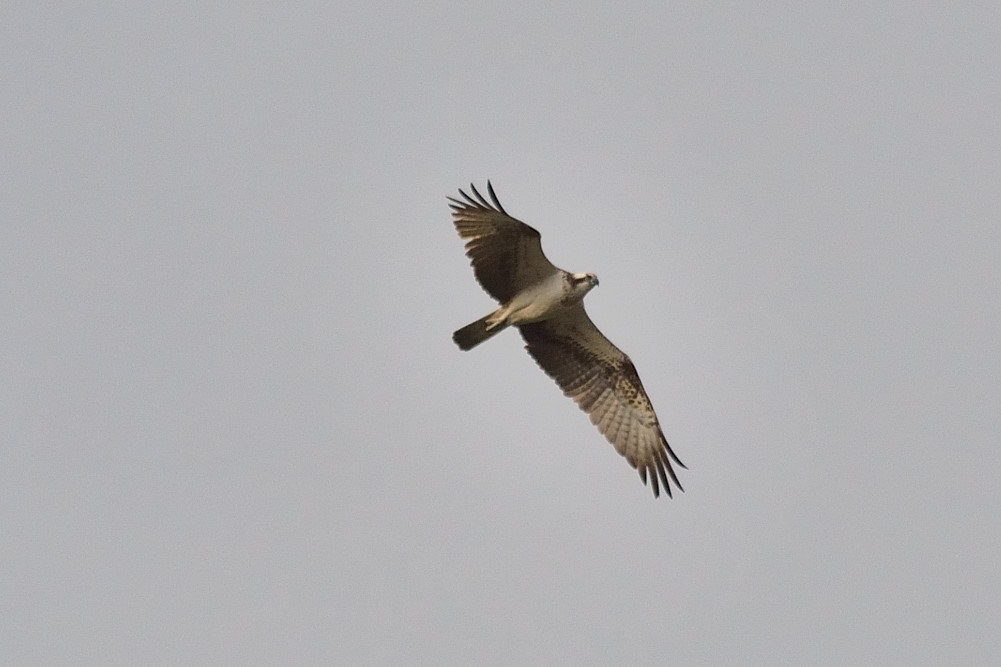
There are only 200-250 pairs of the Osprey in the UK. They winter in Africa, so they are not here all year round. One of the places where they have been seen is RSPB Arne, about 10-15 miles from home. I have been there several times and not seen them. So I wasn’t that hopeful when heading out with my boys early one morning before the start of the new term. We were thrilled to have the hide to ourselves as the Osprey performed some aerial manoeuvres right in front of us. Both boys got photos and excitedly informed everyone they met on the way back to the car park that they had sen the Osprey.
There were 13,316 pairs of Grey Heron in the UK in 2011. They are large birds that stand motionless for long periods beside water, ready to strike at their quarry. They feed mainly on fish.
Grey Heron in flight
The heron has long, slow, powerful wing beats in flight.
The Goldcrest is the UK’s smallest bird, with a population of 610,000 pairs. Primarily a woodland bird, it does occasionally appear in gardens. A delightful little bird.
The Jay is an elusive, colourful woodland bird, a member of the crow family. The blue flash on the wing and the white rump are usually the only sights seen as the shy bird dashes for cover.
Jay – partially hidden by foliage
This picture represents the closest this bird normally allows anyone to get before going deeper under cover.







 Stephen's Wildlife